
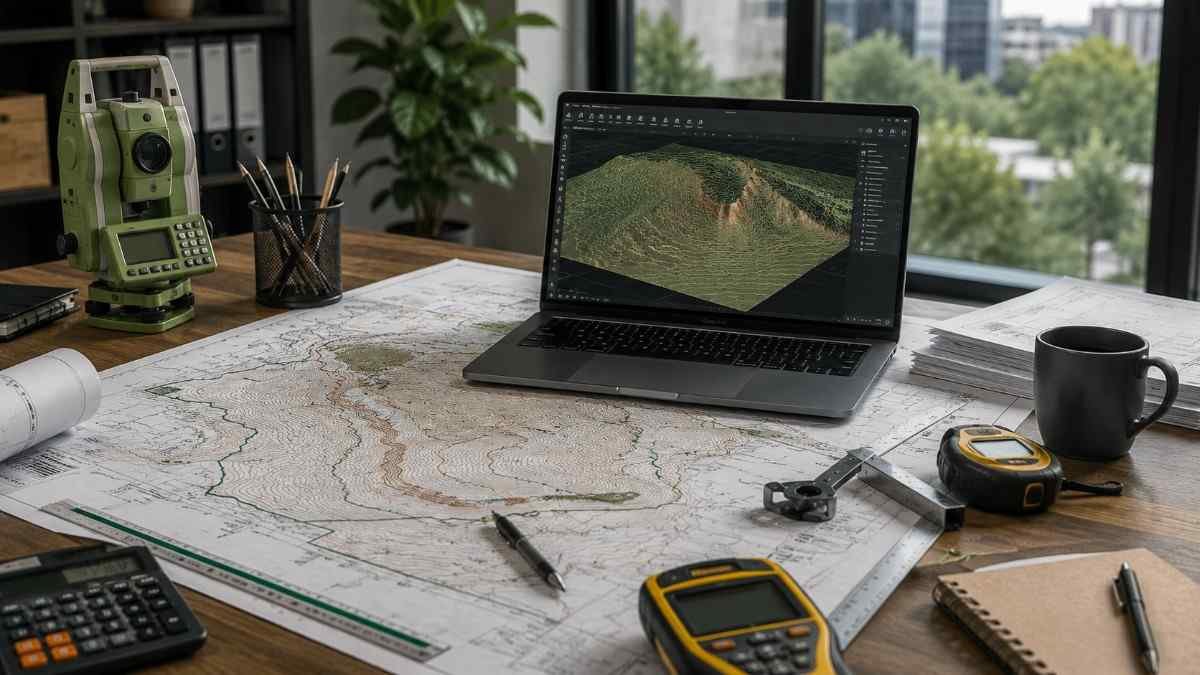
Contour surveys represent a fundamental technique in topographical mapping and land development projects. These surveys provide detailed representations of the terrain, essential for architects, engineers, planners, and environmental scientists. Understanding the purpose, process, and applications of contour surveys is critical for anyone involved in landscape management or construction activities.
What Are Contour Surveys?
Contour surveys involve the measurement and mapping of the elevation and shape of the land surface. Unlike simple boundary surveys, contour surveys offer a detailed illustration of the topography by plotting lines that connect points of equal elevation. These lines, known as contour lines, visually depict slopes, hills, depressions, and other land features.
The Importance of Contour Surveys
Contour surveys provide accurate elevation data, which is essential for assessing site suitability and planning construction works. Proper interpretation of the contours helps to mitigate potential issues such as soil erosion, water drainage problems, and uneven foundation settlements. By giving a clear picture of the landform, these surveys enable efficient and sustainable design decisions.
Applications of Contour Surveys
These surveys are widely used across many industries. In civil engineering, contour data supports the design of roads, bridges, and drainage systems. For architects, contour surveys influence the positioning and orientation of buildings to harmonise with the landscape.
Agriculture benefits by using contour lines for planning irrigation and preventing soil erosion. Additionally, environmental assessments rely on accurate topographic information to understand how changes in the landscape will affect ecosystems.
Key Advantages of Using Contour Surveys
Utilising contour surveys offers several advantages. They help to prevent costly errors in construction by providing reliable elevation data. Surveyors can identify natural landforms and manmade features affecting the development site.
Through contour mapping, accurate earthworks calculations are possible, allowing precise cut and fill estimates during site preparation. Additionally, contour plans facilitate clear communication among project stakeholders, ensuring all parties understand the terrain challenges and opportunities.
The Process of Conducting Contour Surveys

Professional surveyors undertake contour surveys using specialised equipment and techniques. The initial stage involves gathering data points across the area of interest. This is often performed using total stations, GPS devices, or laser scanning tools to determine the precise vertical and horizontal position of numerous points.
After data collection, the surveyor analyses and plots the points’ elevations to create contour lines at regular intervals. The choice of contour interval depends on the project’s scale and terrain complexity; flatter areas might require closer intervals to show subtle changes, while steeper landscapes might use broader spacing.
Technology in Modern Contour Surveys
Advancements in technology have significantly improved the efficiency and accuracy of contour surveys. Aerial drone surveys equipped with photogrammetry and LiDAR sensors enable rapid collection of high-resolution elevation data, particularly beneficial for large or difficult-to-access areas. These modern methods reduce field time and produce detailed digital terrain models suitable for various analyses.
Interpreting Contour Surveys
Interpreting contour lines requires understanding their patterns. Closely spaced contours indicate steep terrain, while widely spaced lines denote gentle slopes or flat areas. Closed loops suggest hills or depressions, depending on whether the elevation increases or decreases towards the centre. Correct interpretation is vital for designing foundations, roads, drainage systems, and landscaping efforts.
Furthermore, surveyors create contour plans summarising these data visually and numerically, often including additional details like boundary lines, existing structures, vegetation, water bodies, and other relevant site features.
Why Consult Professional Contour Survey Services?
Given the complexity and technical expertise required, engaging professional surveyors to carry out contour surveys is advisable. Experienced practitioners ensure accuracy, compliance with local regulations, and proper data interpretation. They also provide valuable insights during the planning phases, reducing risks and optimising project outcomes.
Common Challenges in Contour Surveying
Despite technological advances, contour surveying faces challenges. Dense vegetation, uneven terrain, and inclement weather can complicate data collection. Surveyors must adapt techniques or plan additional fieldwork to overcome these obstacles. Moreover, ensuring data precision requires careful calibration of instruments and validation of measurements.
Regulatory and Environmental Considerations
Many development projects require contour plans submitted as part of planning permissions. Accurate contour surveys help meet regulatory conditions related to land grading, watershed management, and erosion control. Implementing proper survey data supports sustainable land use and protects environmental resources.
Integrating Contour Surveys with Other Survey Types

Contour surveys often complement other types of land surveys such as boundary surveys, construction surveys, and cadastral surveys. Combining multiple survey results gives a comprehensive understanding of a site, aiding strategic decision-making. For example, boundary surveys define legal property limits, while contour surveys provide the topographical context.
Future Trends in Contour Surveying
Emerging technologies continue to influence the field. The integration of artificial intelligence and machine learning promises automated processing of terrain data, improving efficiency. Additionally, the use of BIM (Building Information Modelling) incorporates contour data directly into digital design environments, streamlining project workflows from design to construction.
Summary
Contour surveys are indispensable for detailed landscape mapping, providing critical elevation data that informs various development and environmental projects. Their ability to visualise the terrain through contour lines allows professionals to make informed decisions, enhancing project safety, efficiency, and sustainability. Employing skilled surveyors and utilising modern technologies ensures accurate and reliable outcomes.
Understanding the principles and applications of contour surveys elevates the quality of land management and infrastructure development. For comprehensive and precise contour surveys, it is prudent to consult experienced providers specialising in these services.